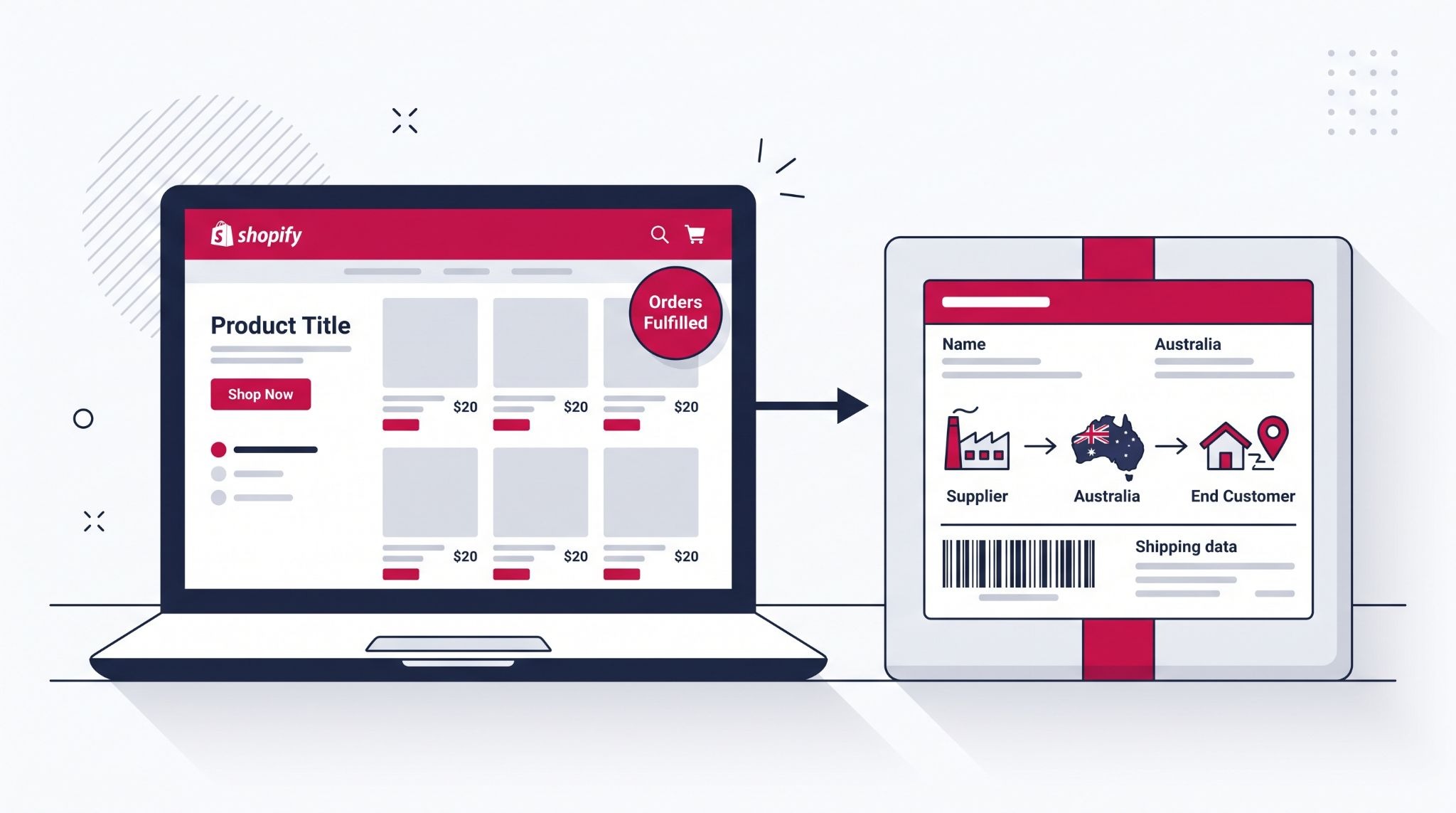
Shopify dropshipping in Australia lets you sell products online without holding a single item of stock. The supplier ships directly to your customer while you boost your sales. Shopify dropshipping is a retail model where a store owner lists products from a third-party supplier, and the supplier packs and ships each order directly to the buyer.
For Australian entrepreneurs, this removes the two biggest barriers to starting an online store: upfront inventory cost and warehouse space. This guide breaks down how it works, what it costs, and whether it's still worth it in 2026.
What is Shopify Dropshipping in Australia?
Shopify dropshipping in Australia is a business model where you sell products through a Shopify store without stocking inventory yourself. When a customer places an order, your supplier ships the product directly to them under your branding, so you only pay for stock once it's already sold.
This matters for Australian sellers because it removes the biggest financial barrier to starting an eCommerce business: you don't need thousands of dollars tied up in stock before you make a single sale.
You handle the storefront, marketing, and customer service. Your supplier handles warehousing, packing, and shipping. Most Australian dropshippers use apps like DSers, Zendrop, or Spocket to connect their Shopify store to supplier catalogues. Oberlo, once the most popular option, shut down its service in 2022 and no longer operates.
How Does Dropshipping Actually Work on a Shopify Store?
Dropshipping on Shopify works through an automated order pipeline. So when you decide to open a Shopify store, you need to sign up for Shopify.
After opening the store, when a customer buys from your store, the order syncs to your supplier through a dropshipping app, and the supplier ships it directly to the customer under your brand. You never touch or store the product yourself.
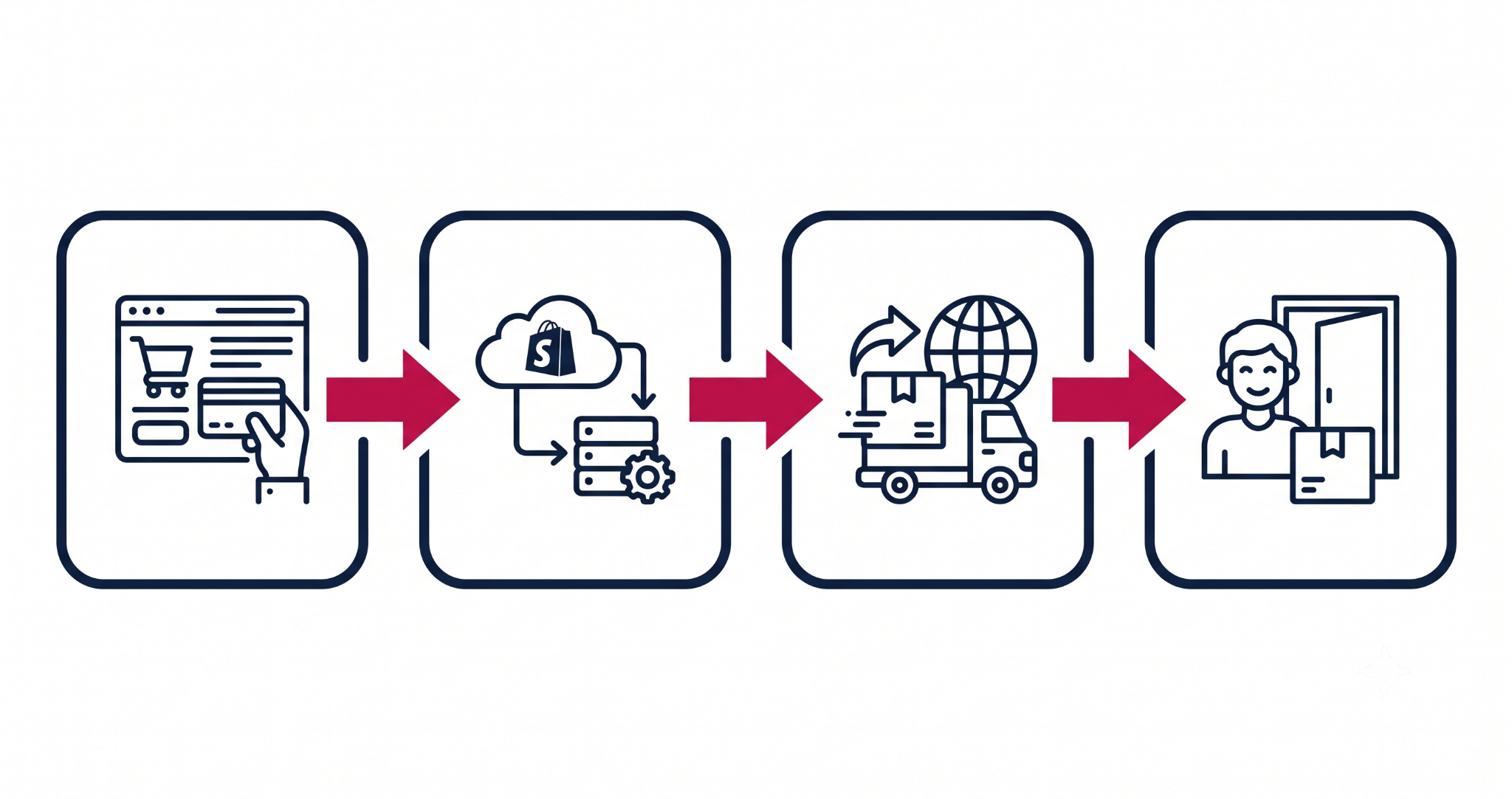
Here's what that pipeline looks like in practice, step by step:
- A customer places an order and pays through your Shopify checkout.
- Your dropshipping app automatically forwards the order details to your chosen supplier.
- The supplier picks, packs, and ships the item directly to the customer's address.
- Shopify updates the order status and, in most cases, generates tracking information automatically.
- You keep the difference between your retail price and the supplier's wholesale cost as profit.
The main job left for you is picking reliable suppliers and setting margins that still leave room to profit after Shopify fees, app subscriptions, and advertising spend.
Is Shopify Dropshipping Still Worth It for Australian Sellers?
Shopify dropshipping is still worth it for Australian sellers who treat it as a real business rather than a shortcut. It suits people with limited startup capital who are prepared to invest time in marketing and customer service, but margins are thinner than those of stocked retail, and supplier reliability varies significantly.
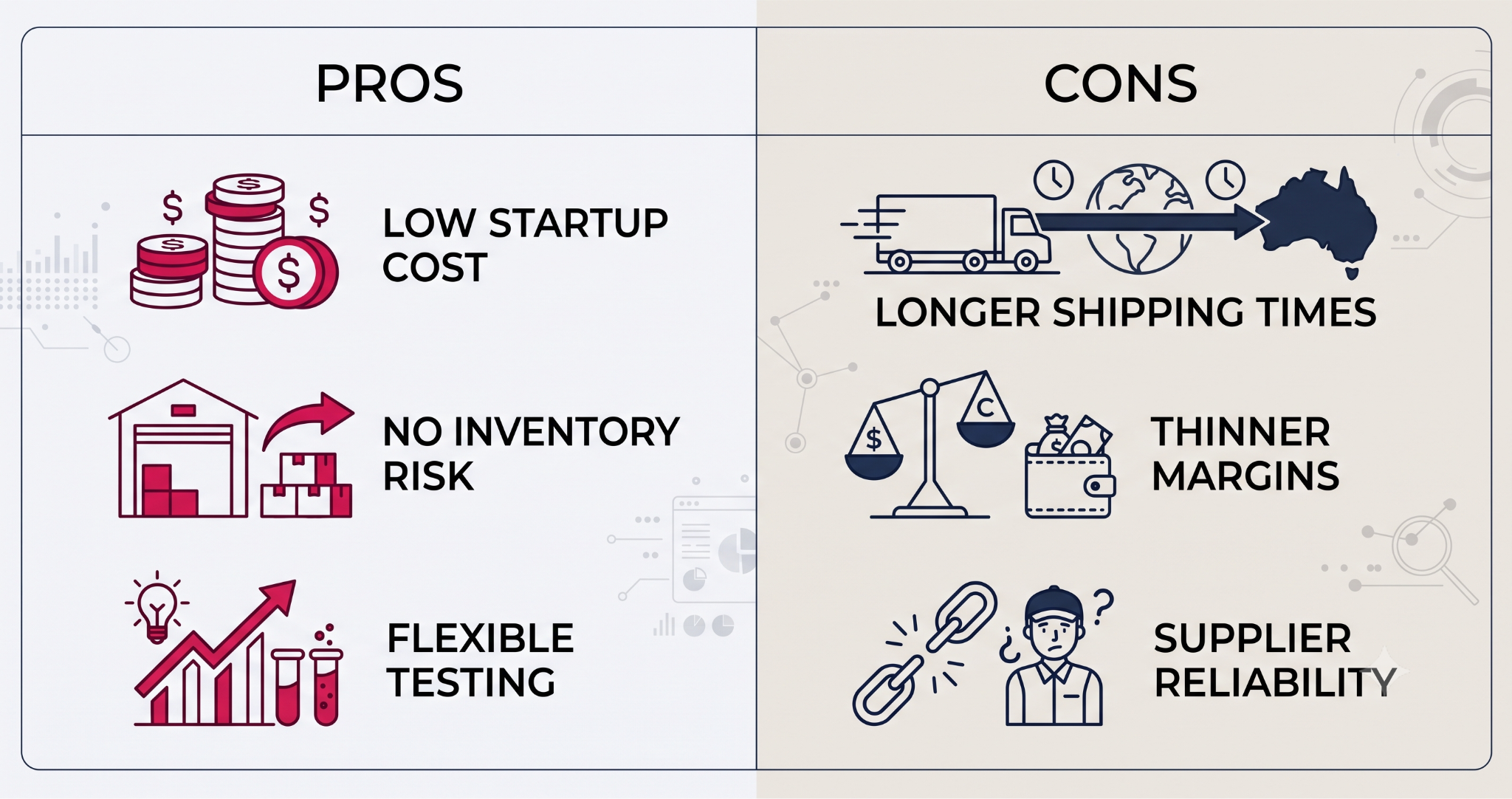
The upside is real: low upfront cost, no inventory risk, and the ability to test multiple product ideas before committing to one. According to Australia Post's 2026 eCommerce Report, Australians spent a record $82.6 billion shopping online - a 14% year-on-year increase - showing just how much room there still is for new online stores to grow.
However, the downside is just as real. Shipping times from overseas suppliers can stretch to two or three weeks, which frustrates customers used to next-day delivery.
Profit margins typically sit lower than those of stocked eCommerce because you're paying wholesale-plus-shipping on every order rather than buying in bulk. Store owners who succeed usually pick a narrow niche, vet suppliers carefully before launching, and build their brand rather than competing purely on price.
How IBF Helps Australian Businesses Build a Shopify Dropshipping Store
Choosing the dropshipping model is only the first decision - the store itself still needs to convert visitors into buyers. A slow theme, a confusing checkout, or a poorly structured product page will undo good supplier choices fast, no matter how strong your marketing is.
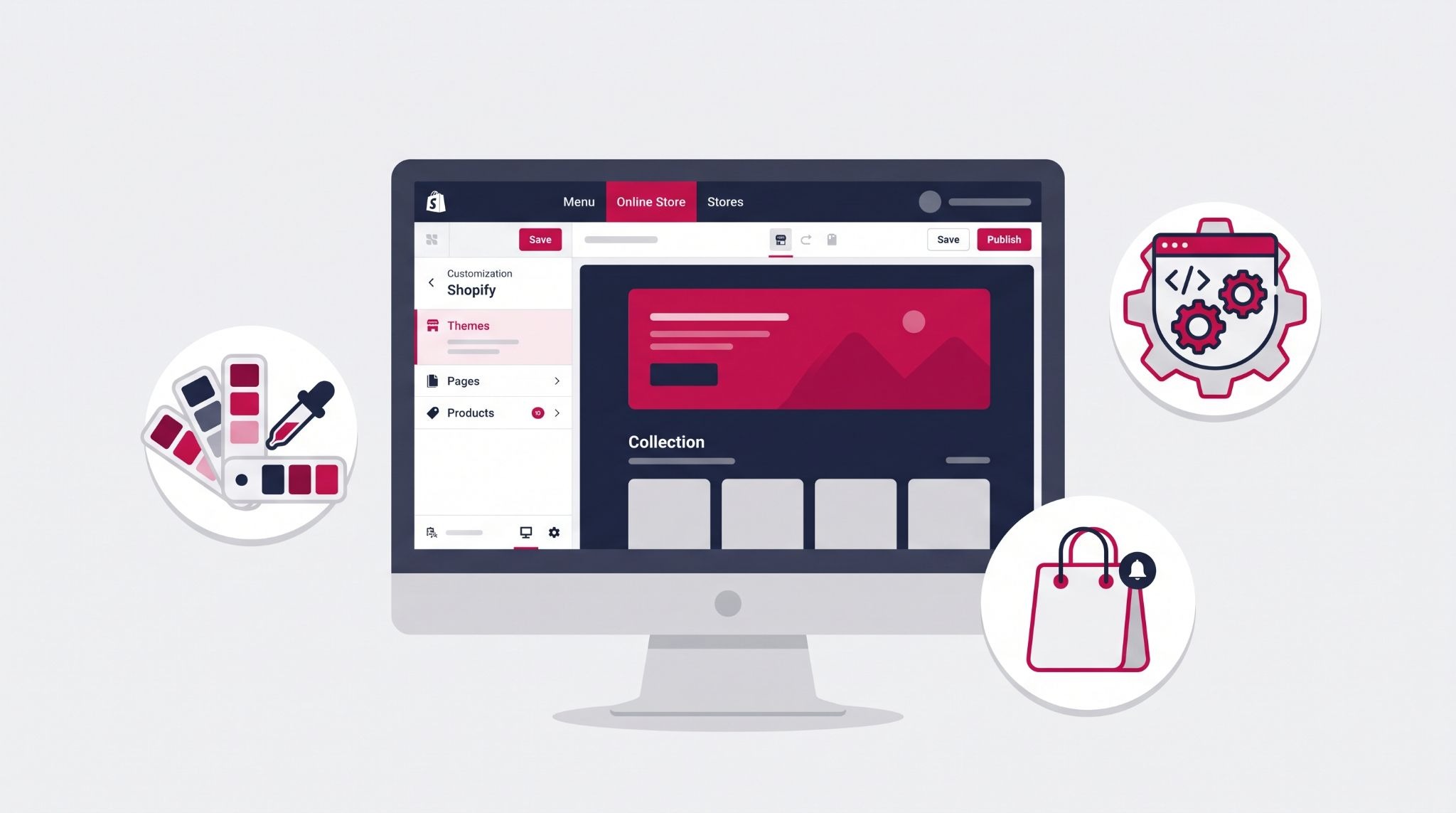
IBF's Shopify development services cover everything from store setup and theme customisation to app integration and conversion-focused design, built specifically for Australian eCommerce businesses running dropshipping or hybrid stock models.
Rather than a generic template, you get a store structured around how Australian shoppers actually browse and buy, with the technical groundwork in place to scale once your product range grows.
Frequently Asked Questions About Shopify Dropshipping Australia
Do You Need a Business Licence to Start Shopify Dropshipping in Australia?
A: You generally need an Australian Business Number (ABN) to trade legally, even as a sole trader, and you should register for GST once your turnover passes the threshold set by the ATO. You don't need a special dropshipping licence, but check import and product-safety rules for the specific items you plan to sell.
How Much Does It Cost to Start a Shopify Dropshipping Store in Australia?
A: Basic costs usually start in the hundreds but can quickly get to thousands as it includes your Shopify subscription, dropshipping app, theme, and initial ad spend. This model is appealing for new Australian eCommerce owners who want to test an idea without committing a large amount of funds up front (and it avoids paying up front for inventory, like stocked retail).
How Long Does Shipping Take With Shopify Dropshipping?
A: Shipping times depend heavily on where your supplier is based. Suppliers shipping from overseas can take one to three weeks to reach Australian customers, while local or Australian-based suppliers can often deliver within a few business days. Slow shipping is one of the most common customer complaints in this model.
Can You Make a Full-time Income From Shopify Dropshipping in Australia?
A: Yes, however, it takes longer than expected and is highly dependent on niche selection, marketing skill, and supplier reliability. Most lucrative stores begin as side income and scale into larger businesses over twelve to eighteen months, as the owner optimises pricing, advertising, and simple customer retention plans in order to grow from a part-time hobby.
What is the Biggest Mistake New Shopify Dropshippers Make?
A: The most common fail is choosing a product based on what was trending, instead of actual demand, with nice margins net of fees. Another common mistake beginners make is skipping proper supplier vetting, which can lead to slow shipping, low-quality products, and refund requests that damage the store's reputation before it has a chance to gain traction.
Wrapping Up
Building a profitable Shopify store takes more than choosing the right supplier - it takes the right structure, design, and strategy behind it. IBF's Shopify development team builds and optimises Shopify stores for Australian eCommerce businesses that want to grow. Get in touch with the IBF team to get started.