
If you are running a construction business in 2026, you are competing against builders who respond to enquiries within minutes, not days. This guide is built for owners, operations managers, and marketing managers who already have a business running and want to grow it, not for people registering a new construction company.
Building a construction company in Australia would depend on your preference for the five below:
- regular lead generation,
- marketing that actually gets projects in front of gatekeepers,
- a CRM sales process that stops leads from falling through the cracks,
- when it comes to quoting, greater speed and professionalism,
- along with admin automation that eats up your week.
Nail those five in sequence and growth no longer becomes a matter of chance.
The State of the Australian Construction Industry in 2026
The Australian construction sector remains one of the largest employers in the country, but 2026 is not an easy year to be running a building or trades business. Material costs have stayed volatile since the post-2020 supply shocks, labour is tight in almost every trade, and margins that used to sit comfortably now get eaten by a single bad month of delays or a subcontractor letting you down.
Demand tells the same story from the other direction. Homeowners went from requesting 2-3 quotes in 2019 to requesting 4-6 on average by 2021 — meaning the builders who win the job today aren't necessarily the best builders; they're the ones who respond fastest and follow up most consistently.
This guide is for established construction businesses ready to scale. If you're still registering your company or getting your first licence sorted, the more relevant starting point is planning the business itself before growth strategy applies.
Why Most Construction Businesses Stop Growing
Growth doesn't stall because the work isn't there. It stalls for reasons that are almost always fixable once you see them clearly.
Inconsistent lead flow: Referrals dry up the moment you stop actively asking for them, and most builders never build a second channel to fall back on.
Slow quote turnaround: If a competitor sends a professional quote same-day and you send yours three days later, you have already lost the job in a client's mind, regardless of price.
Manual admin eating the owner's time: Every hour spent chasing a quote follow-up, re-entering job details, or manually updating a spreadsheet is an hour not spent winning new work or managing the crew.
Subcontractor coordination chaos: The more you grow, the bigger the coordination problem. Without a system, more jobs means more handoff errors, not more profit..
Marketing spend cut the moment work gets tight: This is the single most common growth killer. The builders who keep marketing running through the slow months are the ones still busy six months later.
No visibility into which jobs are actually profitable: Without job costing data tied to your pipeline, you keep chasing volume instead of margin and growth without margin is just more work for the same money.
The Five Pillars of Construction Business Growth (Our Framework)
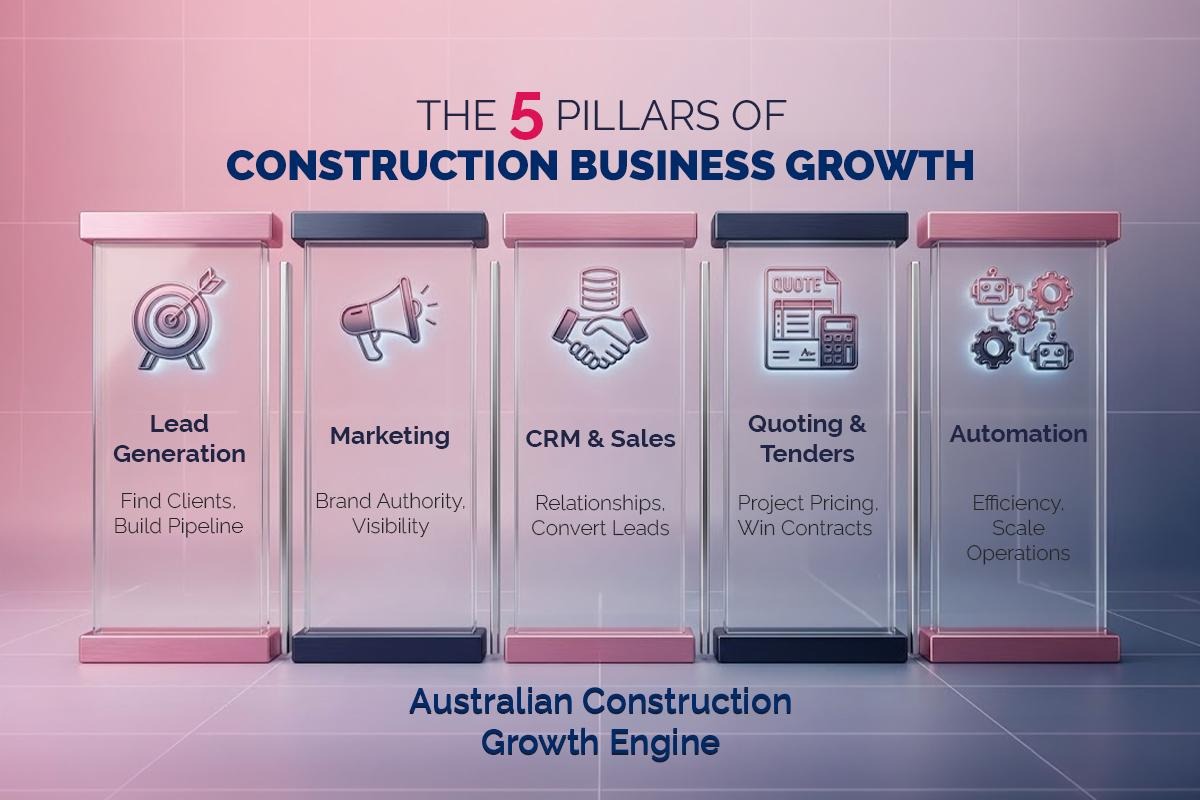
We call this framework the Five Pillars of Construction Business Growth, built from what we consistently see across our HubSpot implementations with Australian builders and contractors:
- Lead Generation and Sales — building a consistent pipeline instead of relying on referrals alone
- Marketing That Wins Jobs — the channels and reputation signals that actually move construction decision-makers
- CRM and Sales Operations — the system that stops leads and quotes falling through the cracks
- Quoting and Tender Efficiency — turning your quote turnaround into a competitive advantage
- Automation and Operations — freeing up owner and office time for growth-generating work
Each pillar builds on the one before it. Trying to fix marketing before fixing quote turnaround, for example, just brings you more leads that fall into the same broken process. We'll walk through each pillar in order.
Pillar 1 — Lead Generation and Sales
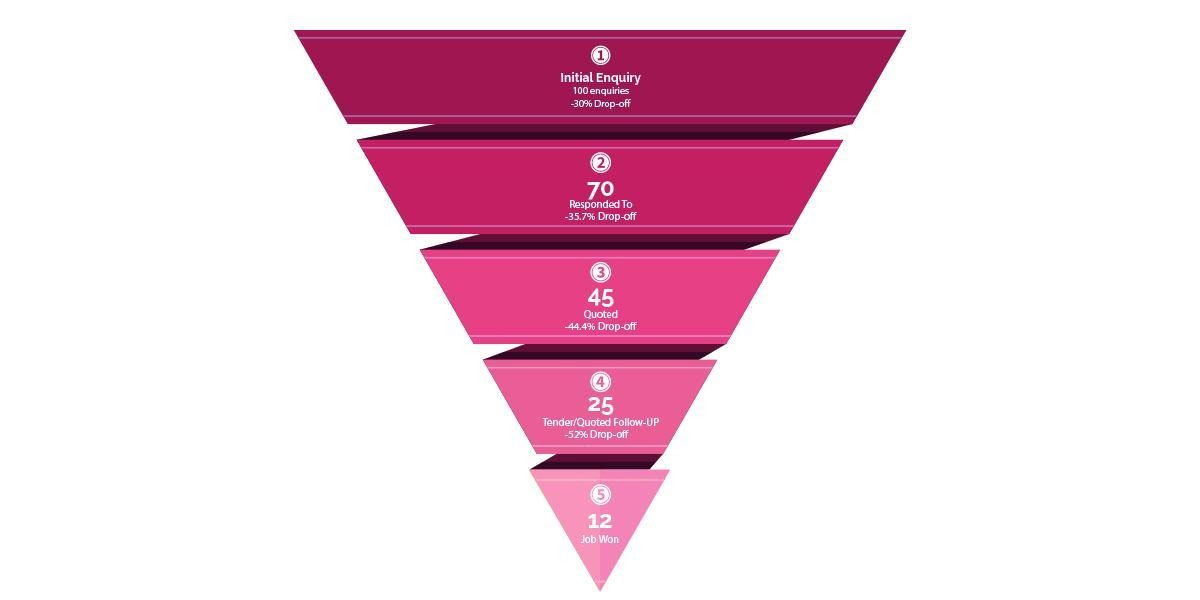
Most construction businesses lose more jobs in the follow-up stage than at the quoting stage. Someone enquires, gets a quote, and then... nothing happens until the client has already gone with someone else.
The numbers back this up starkly: 78% of remodelling and construction projects go to whichever contractor gets to the lead first, and 78% of contractors admit they struggle to follow up on unsold leads. Businesses that put automated follow-up in place on those unsold leads see close rates rise by 8.5%. Response time and follow-up consistency are the two biggest levers most builders aren't pulling.
Referral systems remain the strongest channel for trades and the most neglected. Referrals are evergreen and free, but they don't happen automatically. I suggest you create a short system for ask: at the point of project handover, an automatic follow-up process a few weeks post-completion and a standing offer (discount on next job or small gift) to say thank you for referring someone successful.
Automated follow-up closes the biggest leak in the funnel. If a quote goes unanswered for five days, a simple automated check-in — "Just following up on the quote for your project, happy to answer any questions" — recovers jobs that would otherwise be lost to silence, not price.
Tender win-rate improves the same way. The businesses winning more tenders aren't necessarily the cheapest — they're the ones with a repeatable process for following up after submission instead of waiting to hear back.
Pillar 2 — Marketing That Wins Jobs
Marketing for a construction business looks different depending on who you're selling to. Marketing to a homeowner for a renovation is not the same as marketing to a commercial builder tendering for a $2 million fit-out, and neither is the same as a subcontractor trying to get picked up by more head contractors.
For residential builders, Google reviews and reputation carry outsized weight — a homeowner researching who will build their extension reads reviews the way they'd read a restaurant review before booking a table.
Quotes matter less than case studies in commercial contractors instead of reviews. A well-documented project, with actual numbers to back it up is more effective than any ad.
Referral networks between businesses and a simple, professional online presence (a basic, well-maintained site and Google Business Profile) often trump paid channels entirely for subcontractors and the trades.
Across all three, the channels that consistently work are:
- Google Business Profile, kept current with reviews and photos of real jobs
- SEO, targeting the specific services and locations you actually want work in — not generic "builder" terms
- Google Ads, for high-intent searches where you can afford to bid on the moment someone is actively looking
- Content marketing, building trust before the enquiry happens
I recommend you treat marketing spend as a fixed cost, not a discretionary one you cut the moment a project runs over budget. The builders who keep marketing running through quiet months are consistently the ones still busy six months later — the ones who cut it are the ones asking why the pipeline is empty next quarter.
Pillar 3 — CRM and Sales Operations
What is a CRM for construction companies? A CRM (customer relationship management system) for a construction company is software that tracks every lead, quote, and client relationship in one place — instead of across scattered spreadsheets, inboxes, and sticky notes. For a construction business specifically, that means tracking enquiries from first contact through quoting, job award, project handover, and follow-up for referrals, all in a single pipeline you and your team can see.
This is genuinely the operational backbone of everything else in this guide. Lead generation without a system to manage the leads just creates a bigger mess. Marketing without a CRM to capture and follow up on the leads it generates is money spent creating enquiries that go nowhere.
A construction sales process, run properly, looks like this: enquiry comes in, gets logged automatically (not manually re-typed), gets assigned to whoever owns follow-up, moves through clearly defined stages — enquiry, quoted, followed up, job won or lost — and every stage has visibility for the owner without needing to ask anyone directly.
This is where a tool like HubSpot for business owners enters naturally. It isn't the starting point; the problem of leads falling through the cracks is the starting point, but a properly configured CRM is the practical answer to it.
Pillar 4 — Quoting and Tender Efficiency
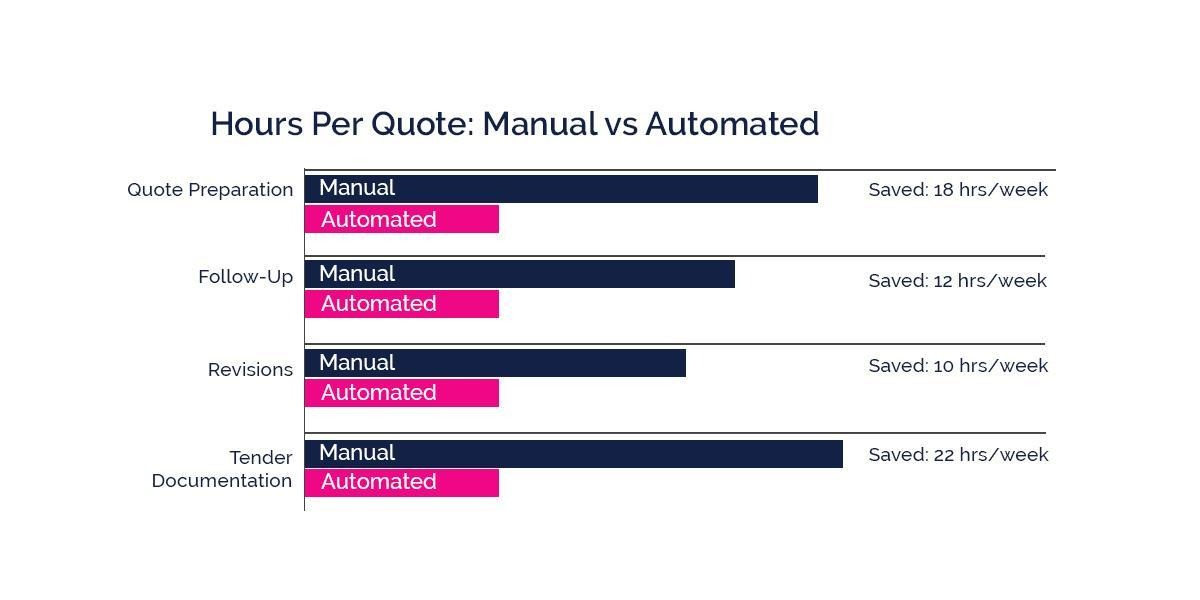
A slow quote turnaround loses jobs to competitors who respond same-day — full stop. This is one of the clearest, most fixable growth levers in the entire framework, and it's the one most builders underestimate.
Automated quote follow-up ensures a quote sent on Monday doesn't just sit there until the client either forgets about it or goes with someone else. A simple, professional check-in a few days after quoting recovers a meaningful share of otherwise-lost jobs.
Professional quote presentation matters more than most builders assume. A quote that looks rushed, with inconsistent formatting, unclear scope, or no branding, signals the same about the work itself, even if the workmanship would be excellent.
Pillar 5 — Automation and Operations
This is the pillar that doesn't get the credit it deserves, mostly because it isn't glamorous. But automating the admin around your existing work is what actually creates the capacity to take on growth.
The specific wins we see repeatedly:
- Automated lead follow-up, so no enquiry sits untouched because the office is flat out
- Automated job status updates, keeping clients informed without someone manually emailing every stage
- Automated reporting, so the owner sees pipeline and job costing data without building a spreadsheet every Friday night
- Automated review requests, sent automatically after job completion while the experience is still fresh
Todd Devine Homes is a clear example of what this compounds into over time; see the case study below.
The Growth Stack — Tools That Actually Help
There's no shortage of software claiming to solve construction growth. Being honest about where each one actually fits matters more than picking a side.
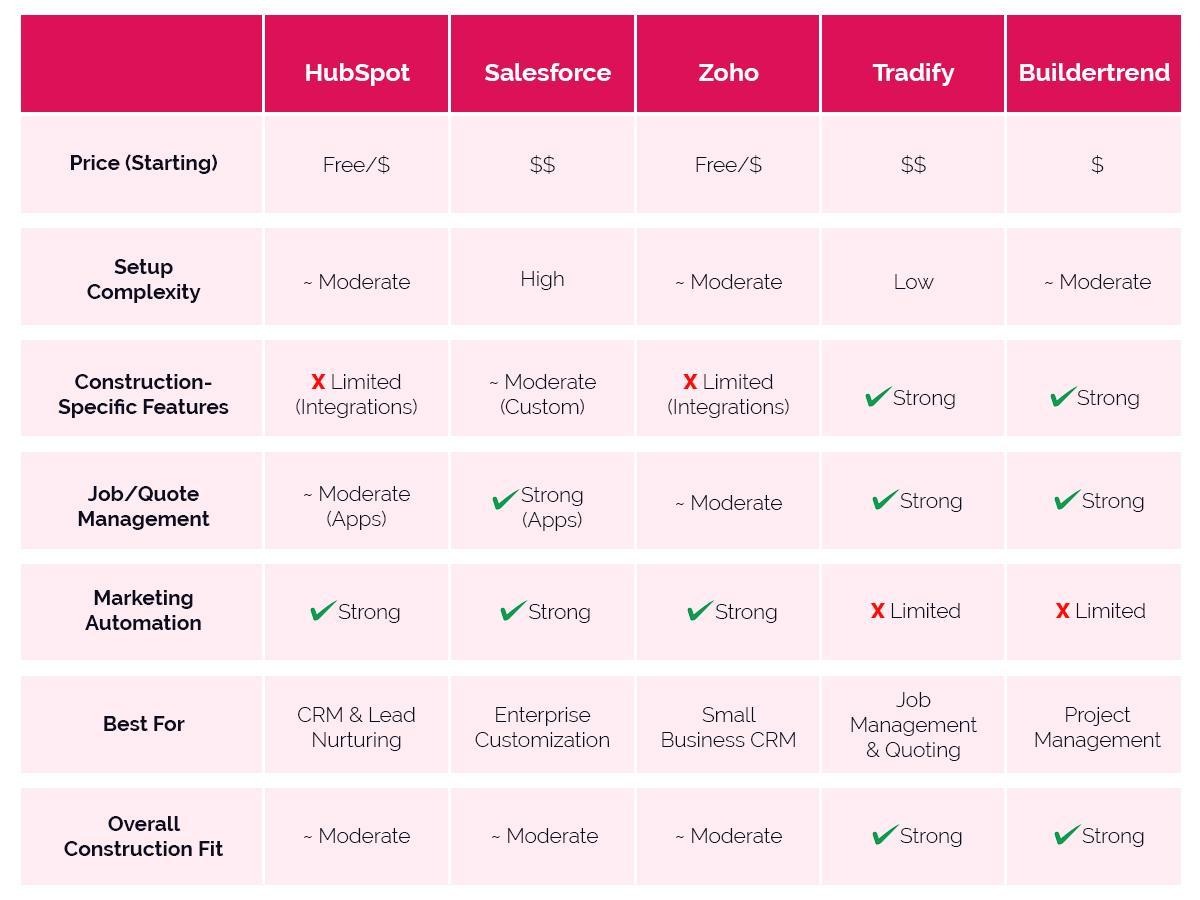
Here's the honest version: Tradify and Buildertrend are job-management-first tools. If your single biggest problem is scheduling, job tracking, and site-level project management, they're genuinely strong choices, and in some cases a better fit than a general CRM.
But if your bigger problem is leads not converting, follow-up not happening, and marketing not being tracked against actual jobs won, HubSpot is the stronger all-in-one fit for most Australian construction businesses — because it connects the marketing and sales side that trade-specific tools don't cover well.
Some businesses genuinely run both: a job management tool for the site. So sales hub implementation is not a compromised answer; it's the right one.
Case Study — How Todd Devine Homes Turned Their Sales Process Into a Growth Engine
Todd Devine Homes, a residential builder based in Sydney, ran their entire sales process through Excel and a disconnected CRM. Leads slipped through the cracks with no central tracking, quotes went out slowly enough to lose signed contracts, and client communication was scattered across emails, calls, and spreadsheets with no way to follow up consistently.
Working with iBusinessFormula, Todd Devine Homes implemented HubSpot's CRM, Marketing Hub, and Sales Hub:
- Custom intake forms and persona segmentation to organise leads from first contact
- Automated sales email sequences replacing manual, inconsistent follow-up
- Custom deal stages and a live sales dashboard for full pipeline visibility
- Nurturing workflows and a content marketing plan to keep prospects engaged
The results compounded year over year. Website traffic grew from 4,500 sessions in 2022 to 10,750 in 2025. Leads climbed from 80 to 210 over the same period, average deal size rose from $3,500 to $5,000, and annual revenue grew from $280,000 to $1,050,000 — a 67% jump in the most recent year alone.
"Before HubSpot, we were struggling with disorganised leads and inefficiencies in our processes, says the CEO of Todd Devine Homes. "Since implementing HubSpot, we've seen a dramatic shift — our lead tracking is seamless, communication is streamlined, and sales forecasting is more accurate."
For more details about the case study, you can look through our detailed case study report on Todd Devine Homes.
Common Growth Mistakes to Avoid
Growth goes wrong in predictable ways. The businesses that scale cleanly tend to avoid these:
- Hiring marketing before fixing the quote turnaround speed. More leads into a broken follow-up process just means more leads lost.
- Buying software without a process to run it. A CRM doesn't fix anything on its own — it supports a process you already need to define.
- Over-automating without human checks on client-facing communication. Automation should remove admin, not remove the personal touch that wins trust in this industry.
- Chasing every job instead of the most profitable ones. Growth in revenue without growth in margin isn't really growth.
- Ignoring job costing data. Without it, you're guessing which jobs are actually worth taking on again.
- Scaling sales before scaling crew capacity. Winning more work than you can deliver damages the reputation that got you the work in the first place.
The 90-Day Construction Growth Action Plan
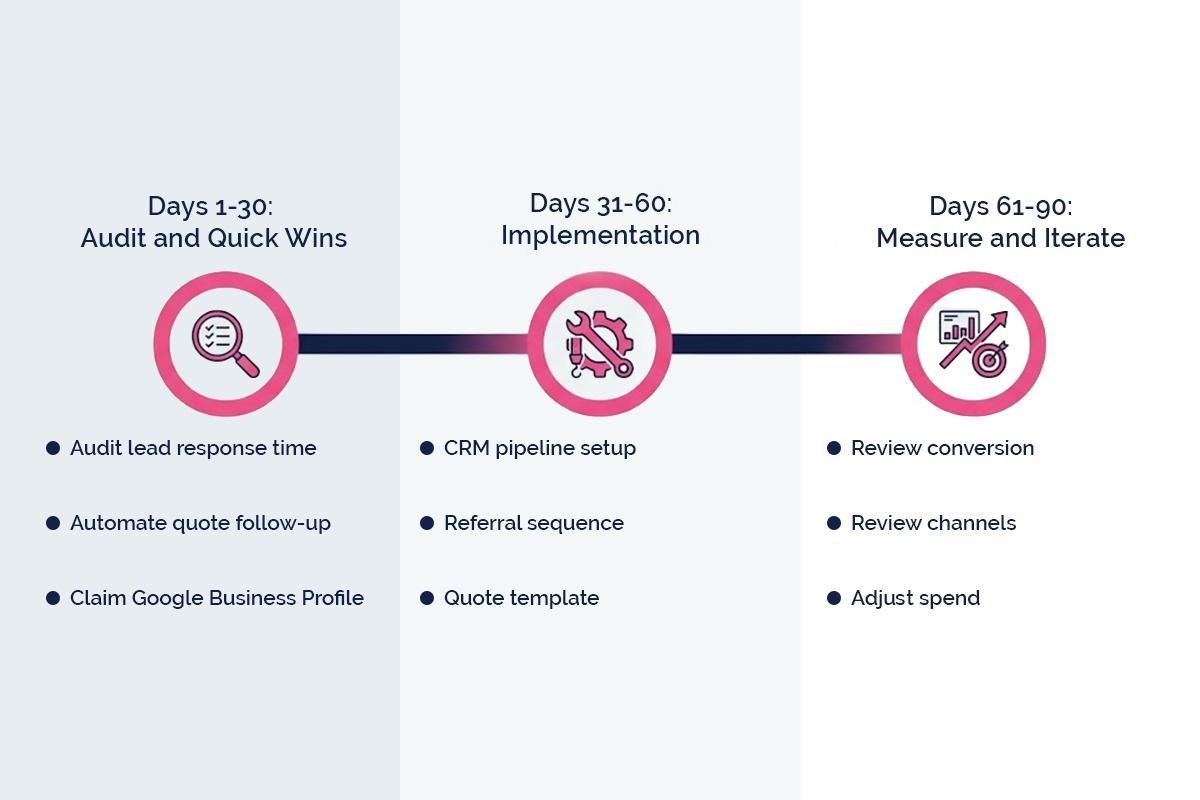
Days 1-30: Audit and Quick Wins
- Audit current lead response time — how long does an enquiry actually sit before first contact?
- Set up automated follow-up on outstanding quotes
- Claim and fully complete your Google Business Profile
Days 31-60: Implementation
- Set up or configure your CRM pipeline stages to match your real sales process
- Build a referral-request sequence for recently completed jobs
- Standardise your quote template and turnaround target
Days 61-90: Measure and Iterate
- Review conversion rate from enquiry to job won
- Review which marketing channel actually produced the best jobs, not just the most leads
- Adjust spend and process based on what the data shows
Frequently Asked Questions
What is a CRM for construction companies?
A CRM for construction companies is software that tracks every lead, quote, and client relationship from first enquiry through project handover, replacing scattered spreadsheets and inboxes with a single visible pipeline.
How long does it take to grow a construction business?
Meaningful growth from the changes in this guide typically shows up within 90 days for lead response and conversion, and 6-12 months for compounding effects like referral volume and repeat business.
What's the biggest barrier to construction business growth?
Inconsistent lead follow-up is the most common barrier — more leads without a system to manage them just creates a bigger, messier backlog.
How much should a construction company spend on marketing?
It depends heavily on business size and growth stage, but the businesses that grow consistently treat marketing as a fixed operating cost rather than a discretionary spend they cut when things get tight.
What's the difference between a CRM and job management software?
A CRM manages leads, quotes, and client relationships before and after a job is won. Job management software (like Tradify or Buildertrend) manages the job itself — scheduling, site tasks, and crew coordination.
Can I automate my quoting process?
Yes, automated follow-up on sent quotes and templated, professional quote presentation are both achievable without custom development.
What's the best CRM for a construction business?
For most Australian builders, HubSpot is the strongest all-in-one option because it connects marketing and sales tracking. Trade-specific tools like Tradify or Buildertrend may suit businesses whose core need is job-site management rather than lead conversion.
How do I win more tenders?
Consistent, prompt follow-up after submission — not just the lowest price — is the most common differentiator between businesses that win tenders regularly and those that don't.
Next Steps
If you've made it this far, you already have the shape of the problem clearer than most. Growing a construction business in Australia in 2026 comes down to fixing the leaks in lead follow-up, in quoting speed, in the admin eating your week before adding more marketing spend on top of a process that isn't ready for it.
The fastest way to find out where those leaks are costing you jobs is to have someone look at your actual pipeline, not guess from a checklist. That's what a Business Growth Audit does. It’s a practical look at where leads, quotes, and follow-up are falling through the cracks in your business, specifically, with a clear list of what to fix first.